The story of Ruth in the Bible is a powerful account of loyalty, faith, and God’s miraculous provision. From her beginnings as a Moabite daughter-in-law in the Bible to her place in Israel’s family line, Ruth’s story teaches enduring lessons about kindness, courage, and trust in God, especially in hard times.
In this post, we explore Ruth’s story and Naomi as they journey from the country of Moab to Bethlehem, where their lives intersect with key characters like Naomi’s near kinsman Boaz. You’ll soon discover that just as God provided for His people then, the Lord grants you encouragement in your faith today.
Who Was Ruth in the Bible?
[Insert featured image here. Alt text: “text on image reads: The Story of Ruth in the Bible”]
Ruth (from a Hebrew word meaning “friendship”) was a Moabite daughter-in-law in the Bible, married into an Israelite family, who had sojourned from Bethlehem to the country of Moab because of a famine. Even after Ruth’s husband died (the name of the man was Mahlon), she chose to stay with her beloved mother-in-law (“Ruth clave” or “clinged to” Naomi; Ruth 1:14), demonstrating extraordinary loyalty. Because of Ruth’s unwavering devotion and personal sacrifice, she would eventually birth a son by Boaz, giving him the name Obed. He would become for Naomi “a restorer of thy life, and a nourisher of thine old age” (Ruth 4:15). Even more, her son would become the father of Jesse, father of David, king of Israel.
Ruth’s Story and Naomi: Early Life and Marriage
Ruth’s story takes place during the volatile time of the Judges as recorded in the Old Testament biblical book of Judges. It is a time when the Jewish people were struggling to establish themselves in the promised land, even succumbing to civil war.
When a famine strikes, one Israelite family, led by Elimelech, a man of Bethlehem in Judah and whose name of his wife is Naomi, seeks refuge in the fields of Moab. But disaster strikes again when Elimelech, Naomi’s husband, dies. If the story of Naomi was not terrible enough, both of her sons, who had taken wives of the women of Moab, died. Even more, the family line was threatened because neither Ruth, wife of Mahlon, nor Orpah, wife of Chilion, had borne any children.
For more on women of courage and faith throughout Scripture, see my Bible Studies on Hagar, Tamar and Rahab here.
Ruth’s Story of Devotion to Naomi
But all is not lost, for this is not the end of the story, but rather the beginning. When Naomi hears of God’s miraculous provision to end the famine, she heads back to Bethlehem, but her widowed Moabite daughter-in-law wants to return with her, even after Naomi urges her Moabite daughters-in-law to “return to your mother’s house,” knowing life would be hard if they remained with her. After all, Naomi has reached old age, unable to bear sons who could marry. But the Bible tells us that Ruth clave (clung to) Naomi, saying:
“Where you go I will go, and where you stay I will stay. Your people will be my people and your God my God.” Ruth 1:16
There is perhaps no other story in the Old Testament that embodies such love and loyalty! Along with committing herself to follow the God of Israel, Ruth vows to stay with Naomi until even “death part thee” from me Ruth 1:17. Right from the start, Ruth’s encouragement and care for Naomi offers a shining example of hesed, a key Hebrew word in Ruth’s story that means “kindness” or “loyal love”, even in the midst of extreme difficulty.
To read the full text of Ruth chapters 1 through 4, visit Bible Gateway here.
The Journey from Moab to Bethlehem
Hardship and Faith
Ruth’s story continues as she and Naomi make their way to Bethlehem, arriving at the beginning of the barley harvest. But Naomi wrestles with her grief, feeling that the Lord dealt harshly with her, saying, “the Lord Almighty hath dealt very bitterly with me” and convinced that the hand of the Lord was against her.
Boaz and Ruth Biblical Story – God’s Provision
Meanwhile, Ruth finds herself gleaning in Boaz’s field. Boaz is a kind and honorable landowner who happens to be a close relative of Naomi. In former times, God’s law made provisions to protect the poor by instructing landowners to allow the poor to glean in their fields, though few were faithful in keeping this practice.
Naomi’s close relative Boaz, however, goes out of his way to protect and provide for Ruth by commanding his young men not to harm or harass Ruth, showing unusual kindness to a widowed Moabite refugee.
Behind it all, the faithfulness of God is at work in the lives of Ruth and Naomi. From ending the famine, to watching over Ruth and Naomi as they traveled from the land of Moab, to providing food and protection in Bethlehem (a Hebrew word meaning “House of Bread”), the story of Ruth unfolds God’s miraculous provision and care, every step of the way.
When Naomi learns that Boaz is not only kindred, but could take part as a kinsman-redeemer, the story of Ruth really heats up. Naomi sends Ruth to visit Boaz at the threshing floor at night, which could be mistaken as Ruth behaving like a prostitute.
Boaz was sleeping at the end of the heap of corn (grain) but when he was startled and awakened, he discovered Ruth lying at his feet. She explains, “I am Ruth thine handmaid: spread thy skirt over me, for you are a near kinsman.” Boaz, being a kind, honorable man, recognized Ruth’s marriage proposal as an act of exceptional kindness, even sacrifice.
So Boaz visits the gate of his place among the men of the elders of the city the following morning to make his case for marrying Ruth. He does so by seeking to purchase the field from the hand of Naomi and her sons Mahlon and Chilion. In doing so, Boaz is willing to risk his reputation and even his future by marrying Ruth. If she, who was married for 10 years but childless, never births a son or births only one son, Boaz’s family line and name will die out completely.
But the prophetic blessing of the community hints at God’s blessing on Boaz and Ruth:
“The Lord make the young woman that is come into thine house like Rachel and like Leah, who built up the house of Israel. . . . And let thy house be like the house of Pharez, [or “Perez”] whom Tamar bore to Judah.” (Ruth 4:11-12)
When Ruth gives birth to a son, the women of the town give him the name Obed (a Hebrew word meaning “worshipper” or “servant”), saying to Naomi, “The Lord has not left you this day without a redeemer.” Whereas Boaz stepped into the role of redeemer, now, with the birth of Obed, Naomi has a redeemer.
While the concept of death appears a full 12 times in the short book of Ruth, with the birth of Obed, God blesses Naomi after all she had suffered with a child who would be to her a “restorer of life.”
What makes Ruth’s sacrifice so profound in allowing Naomi to claim the child as her own is that, unlike Naomi, this is Ruth’s first (and perhaps only) child. This is why Boaz commends Ruth for her love for Naomi in showing such kindness.
You can also explore common questions about Ruth at GotQuestions.org.
What Is the Story of Ruth and Naomi in the Bible? A Summary of the Book of Ruth
Just as God chose the unlikely tribe of Judah to become the chosen royal line, the book of Ruth continues Judah’s ancestry by elevating a woman from Moab to become the great-grandmother of Israel’s most beloved king. It is the same for you and me. God does not choose us based on who we are or what we have or haven’t done. He chooses us based on Who He is. Praise God for His kindness and mercy!
If the story of Ruth has taught us anything, it is that God delights in showering His hesed kindness onto others, and He especially enjoys doing it through people just like us.
The book of Ruth offers hope for the fractured nation through the courage and kindness of two women, the compassion of one man, and the providence of Almighty God.
What Can We Learn from Ruth’s Story?
Key Lessons from Ruth’s Faithfulness
Faith in God during hard times. Ruth’s unwavering trust in God, even after devastating loss, reminds us that God’s provision does not always arrive when we expect it, but it always arrives right on time.
The importance of loyalty, obedience, and courage. Ruth’s choice to stay with Naomi was costly. It required her to leave everything familiar behind. Her loyalty was not passive. It was an active, daily decision rooted in love.
Practical application for readers today: supporting family and trusting God. The lessons from Ruth’s faithfulness are not reserved for ancient history. They are an invitation for us today, to show up for the people in our lives, to trust God in the hard seasons, and to believe that He is working even when we cannot see it.
How Did Ruth Show Faithfulness to God?
Ruth demonstrated faithfulness to God through her devotion to Naomi, her humility in gleaning in the fields, her obedience to Naomi’s instruction, and her trust in God’s provision at every turn. Her life is a living picture of hesed, loyal love that costs something and gives everything.
Conclusion: The Enduring Impact of Ruth’s Story in the Bible
The story of Ruth in the Bible is far more than an ancient love story. It is a testimony to what God can do through one ordinary woman who chooses loyalty over comfort, faith over fear, and courage over self-preservation. Ruth began as a Moabite widow with nothing to offer by the world’s standards. Yet through her faithfulness, she became woven into the very lineage of Jesus Christ, proof that God does not measure worth the way the world does.
As you reflect on the lessons from Ruth’s faithfulness, consider how her story speaks directly into your own. You may be in a season of loss like Naomi, or a season of courageous stepping out like Ruth, or a season of extending unexpected kindness like Boaz. Wherever you find yourself, the invitation is the same: trust the God who sees you, provides for you, and has not forgotten you.
Take a moment today and ask yourself: Where is God calling me to show up with hesed love, even when it costs me something? Where is He asking me to trust His provision even when I cannot yet see it? What act of loyalty, faith, or courage is right in front of me, waiting to be taken?
The story of Ruth reminds us that God’s greatest redemption stories are often written in the quiet, faithful moments nobody else sees. May yours be one of them.
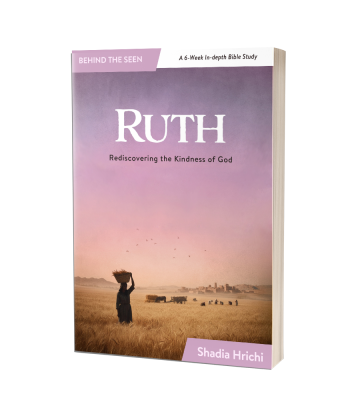
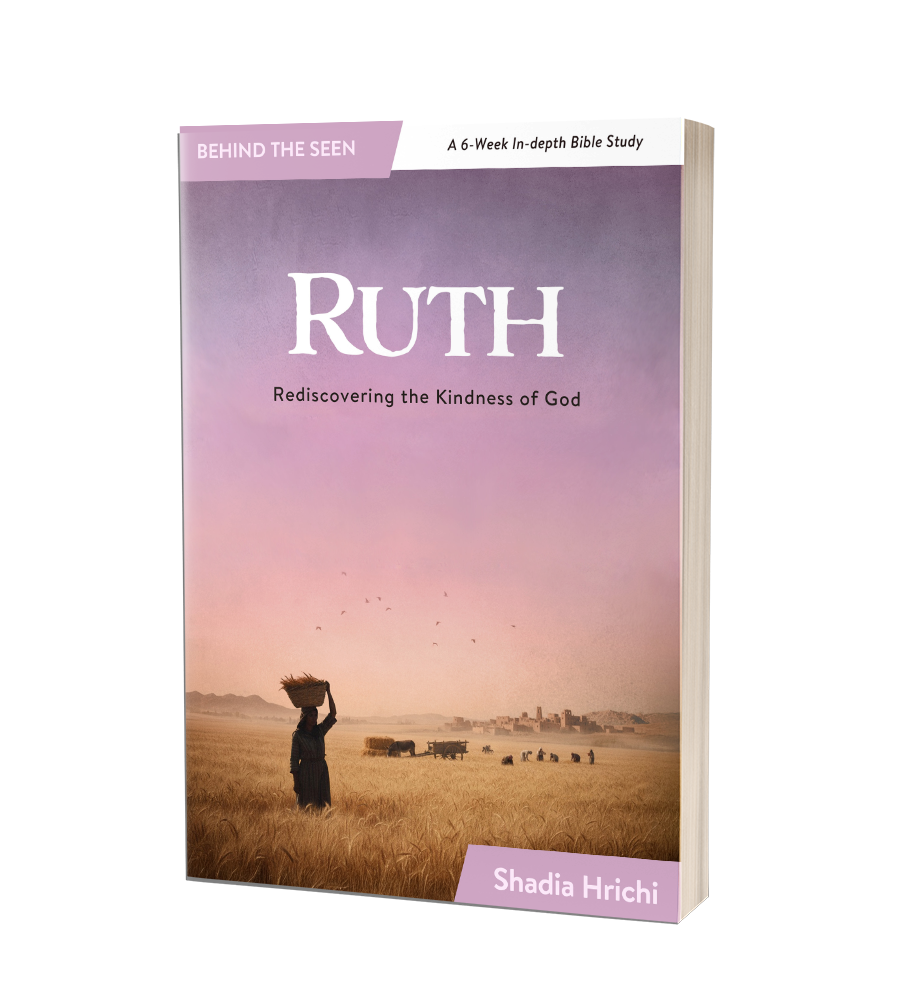
→ Want to go deeper? Pre-order your copy of Ruth: Rediscovering the Kindness of God and get the RUTH Bible Study PREORDER Bundle (with Exclusive Bonuses!) today!
Frequently Asked Questions About the Story of Ruth in the Bible
Who was Ruth in the Bible?
Ruth was a Moabite woman who married into an Israelite family from Bethlehem. After her husband died, she chose to remain loyal to her mother-in-law Naomi and travel with her back to Bethlehem, where she eventually married Boaz and became the great-grandmother of King David.
What is the story of Ruth and Naomi?
The story of Ruth and Naomi is one of loyalty, grief, and redemption. After both women were widowed, Naomi encouraged Ruth to return to her own people in Moab. Ruth refused, famously declaring that Naomi’s people and God would be her own. Together they journeyed to Bethlehem, where God’s provision unfolded through Boaz, a kinsman-redeemer who would marry Ruth and restore both women’s futures.
How did Ruth show faithfulness to God?
Ruth showed faithfulness to God by leaving her homeland, her family, and everything familiar to follow Naomi and embrace the God of Israel as her own. She demonstrated humble obedience, loyal love, and courageous trust at every step of her journey, even when the outcome was uncertain.
What can we learn from Ruth’s story?
Ruth’s story teaches us that God’s faithfulness works through the faithfulness of ordinary people. It teaches us the power of loyal love, the courage required to step into the unknown, and the truth that God’s provision is always at work even when we cannot see it. The story of Ruth is also a beautiful reminder that God does not choose us based on our background or our past, but based on His grace and mercy.
What is a summary of the Book of Ruth?
The Book of Ruth is a four-chapter account set during the time of the Judges. It follows Naomi, an Israelite woman who loses her husband and both sons while living in Moab, and Ruth, her Moabite daughter-in-law, who refuses to leave her side. Together they return to Bethlehem, where Ruth gleans in the fields of Boaz, a relative of Naomi. Boaz acts as a kinsman-redeemer, marrying Ruth and restoring both women’s futures. Ruth gives birth to Obed, who becomes the grandfather of King David and an ancestor of Jesus Christ.
Who was Boaz in relation to Ruth?
Boaz was a wealthy and honorable landowner in Bethlehem who was a close relative of Naomi. He served as a kinsman-redeemer, a role in Israelite culture that allowed a male relative to marry a widow and preserve the family name and inheritance. His kindness toward Ruth and his willingness to take on the risk of marrying her made him a picture of God’s own redeeming love toward His people.
The fascinating topic of Ruth is at the center of my newest Bible study, RUTH: Rediscover the Kindness of God. This is a study you don’t want to miss!

Shadia is a passionate Bible teacher, multi-award-winning author, and speaker who has a heart for seeing lives transformed by the power of God’s Word. She holds a master’s in biblical and theological studies from Western Seminary and is the author of several books and Bible studies.
 I believe you can experience deep and refreshing engagement with God’s Word, even if you’ve read it many times before.